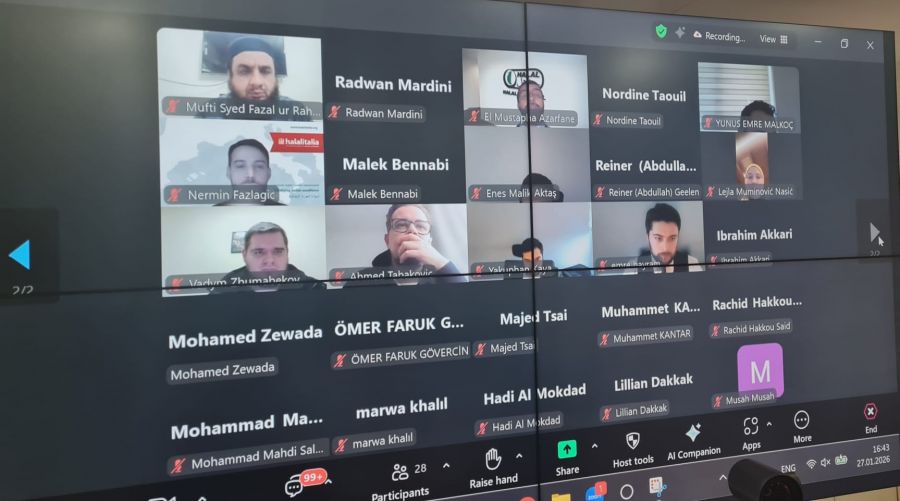
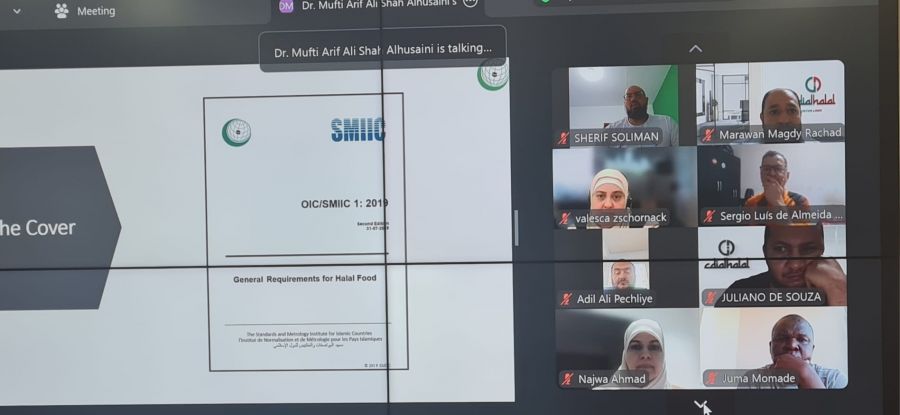
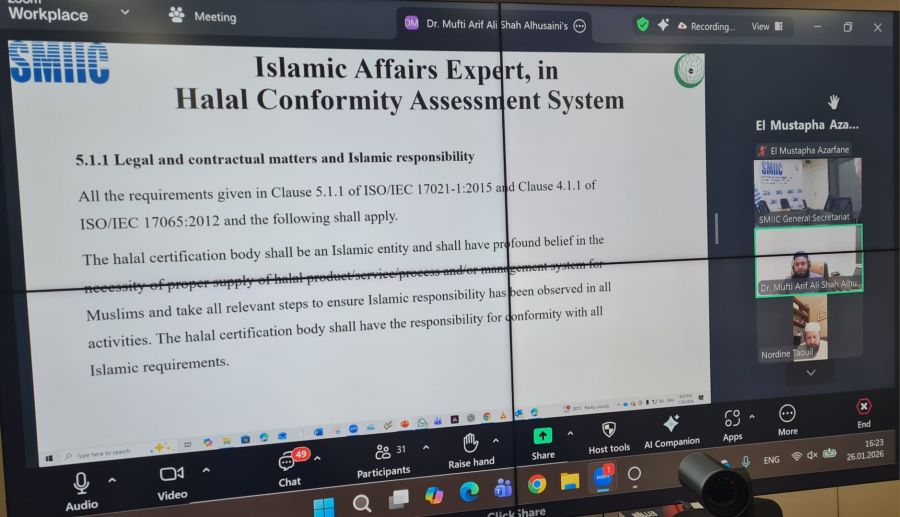
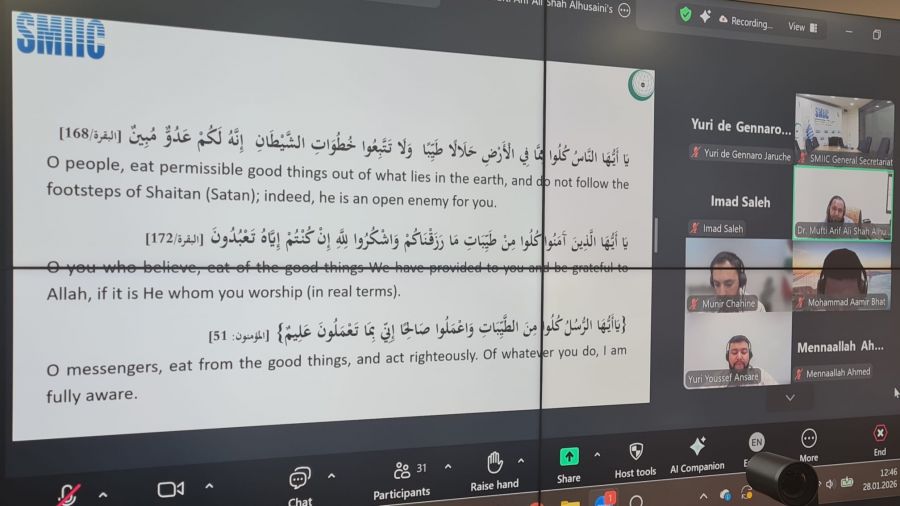
SMIIC successfully conducted two training groups under the Islamic Affairs Expert – Foundation Training, based on OIC/SMIIC 1:2019 – General Requirements for Halal Food, as part of its ongoing efforts to strengthen halal quality infrastructure and build technical, Sharia capacity among halal stakeholders.
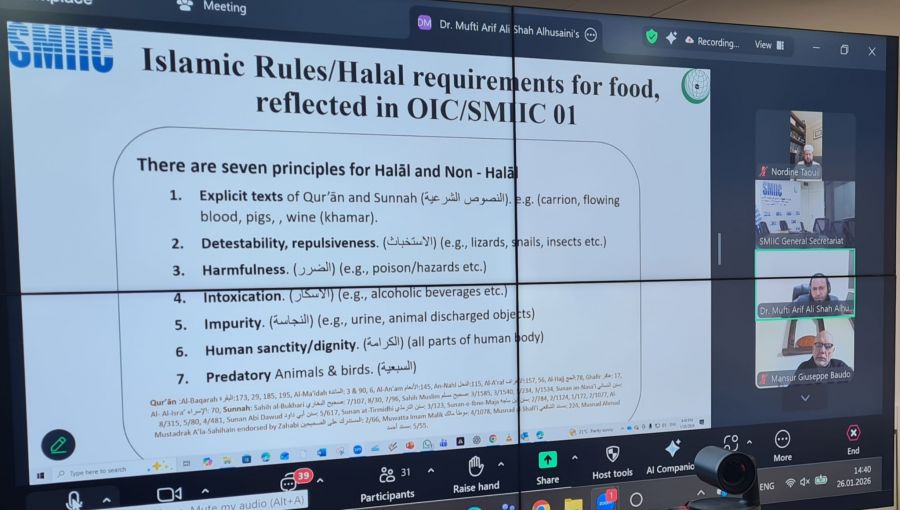
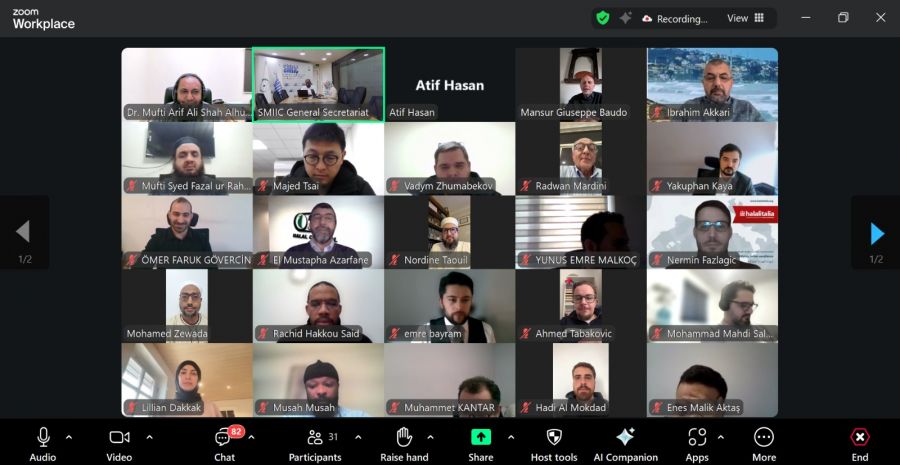
The first training group was held virtually from 26 to 27 January 2026. The session attracted 31 participants from a diverse range of countries, including Belgium, Canada, Denmark, France, Germany, Italy, the Netherlands, New Zealand, Spain, Taiwan, Ukraine, and the United States of America, reflecting the growing global interest in OIC/SMIIC halal standards.
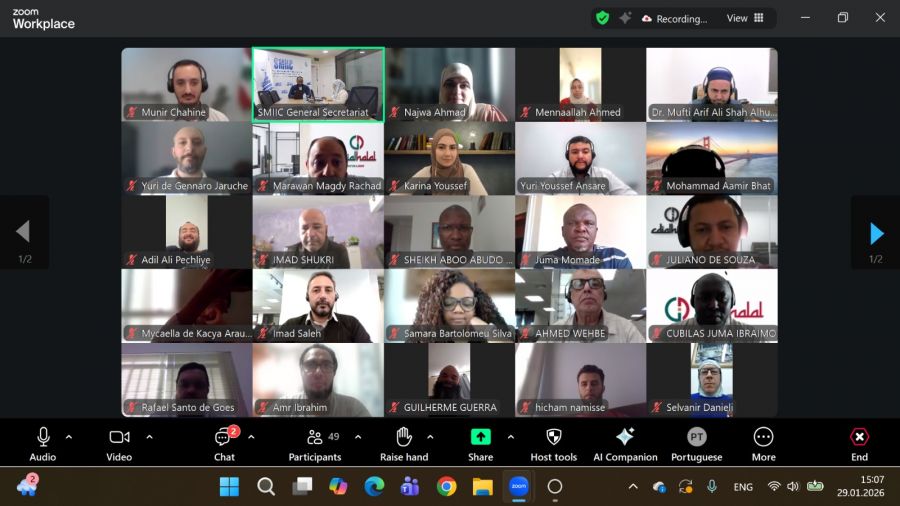
The second training group took place virtually from 28 to 29 January 2026 and was dedicated to 53 staff members from CDIAL HALAL. To ensure effective knowledge transfer and full participation, the training was delivered with the support of a Portuguese interpreter, facilitating technical discussions and interactive engagement throughout the sessions.
The course was delivered by Dr. Mufti Arif Ali Shah, a distinguished expert from the SMIIC Trainers Pool, and provided participants with a comprehensive understanding of the Islamic and technical skills. The training covered the following key topics:
• The importance and necessity of halal in the global food system
• Shari’ah principles, Islamic rules, and regulations embedded within OIC/SMIIC 1:2019
• Food safety and quality control from a Shari’ah perspective
• The role and responsibilities of the Islamic Affairs Expert within the halal conformity assessment system
Through interactive discussions and practical explanations, participants gained essential knowledge to support the consistent and correct implementation of Islamic affairs expert skills in line with OIC/SMIIC standards.
This training forms part of SMIIC’s continuous capacity-building and awareness-raising activities, aimed at enhancing technical competence, promoting harmonization of halal standards, and supporting both the private sector and conformity assessment bodies in achieving effective and credible implementation of OIC/SMIIC standards at the national and international levels. of OIC/SMIIC halal requirements.